
Hannah Eve Rothbard
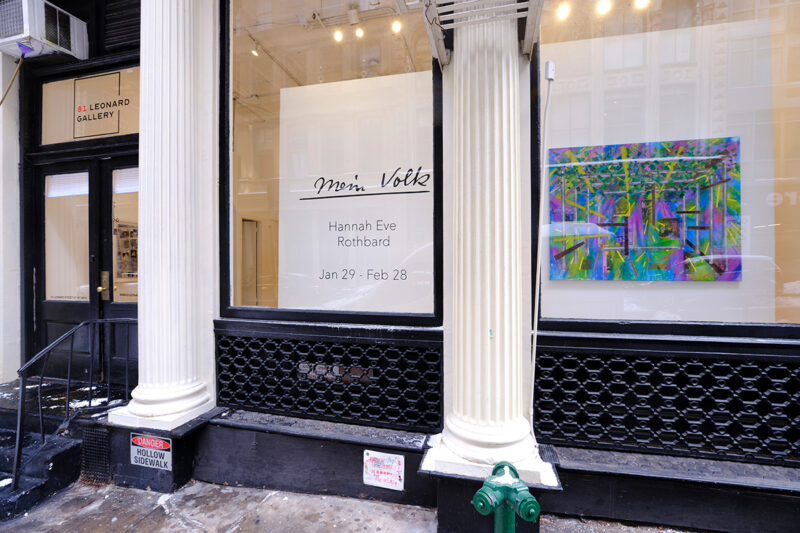
Mein Volk
Jan 29 – Feb 28, 2026
reception Sat, Jan 31 from 6-8pm

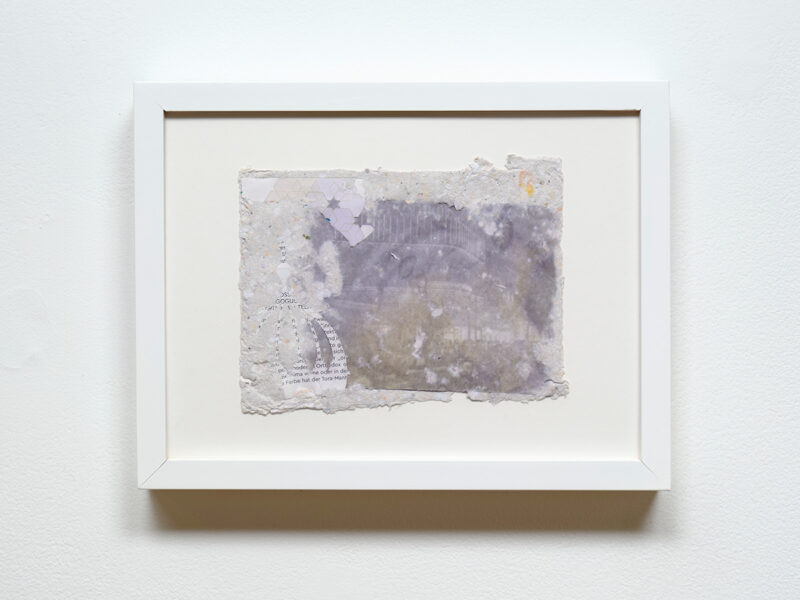
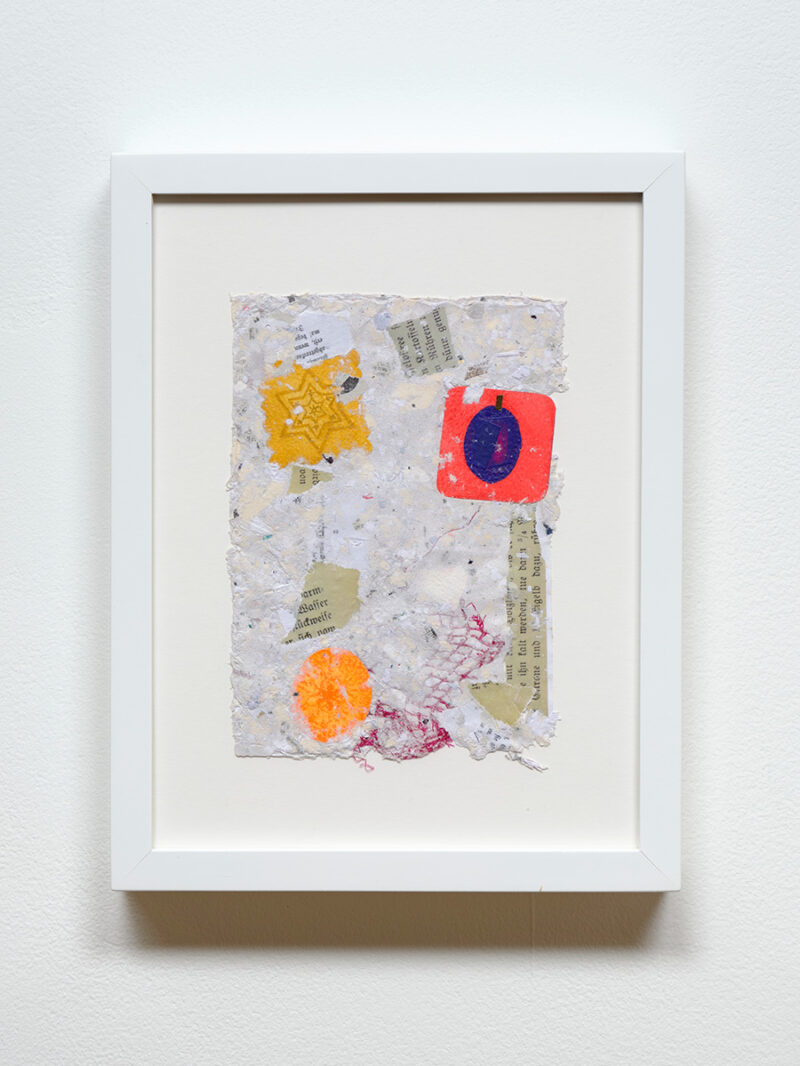
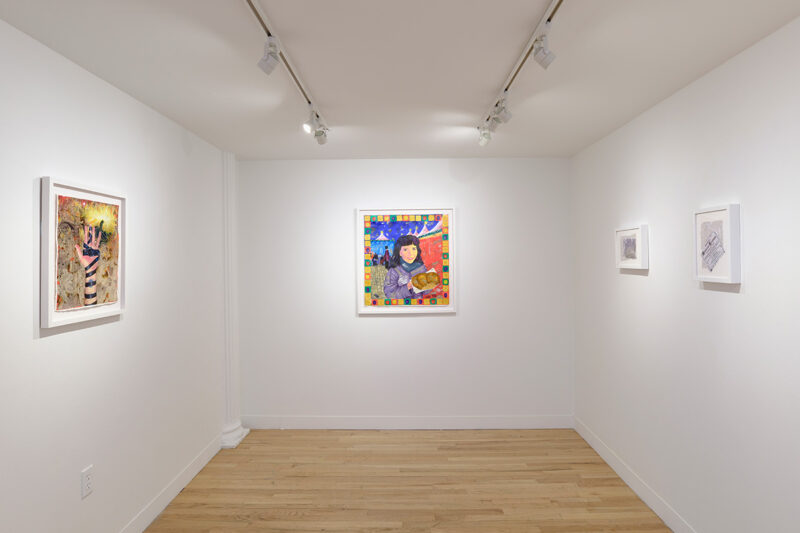
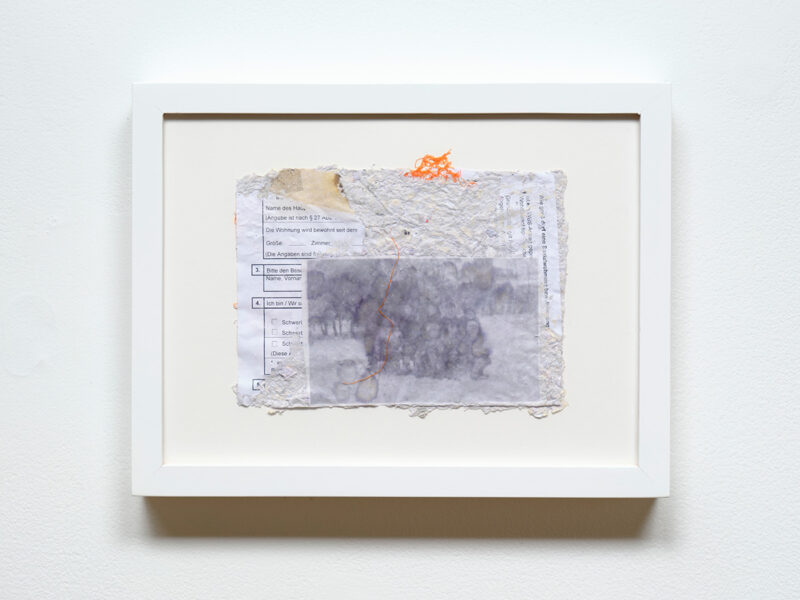
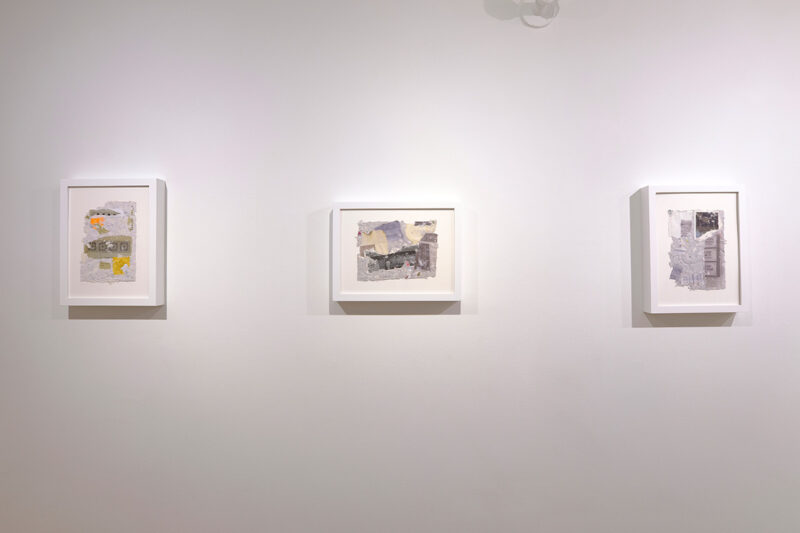
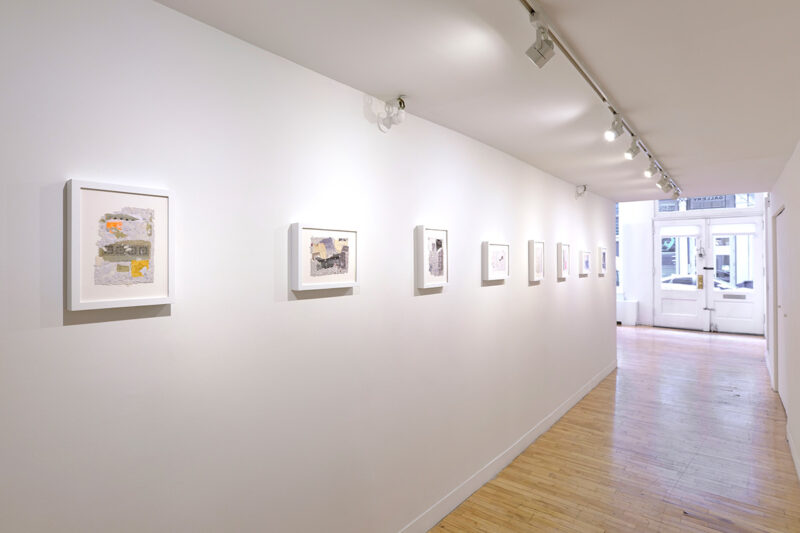
In a city where Jewish life is marked as much by loss as renewal, Hannah Eve Rothbard’s Mein Volk emerges from a year of living, researching, and painting in Berlin on a Fulbright Award. The works gathered here—mixed media paintings and handmade papers—examine what it means to be a Jew in Berlin today. Rothbard wrestles with ideas of presence and absence inherent in German Jewish life, drawing inspiration and material from extensive archival research into Jewish communities in Germany before, during, and after the Holocaust. The title of the exhibition, Mein Volk, is borrowed from a prewar poem by German Jewish Modernist poet Else Lasker-Schüler, who fled Berlin in 1933. The word Volk bears the burden of its later appropriation by Hitler in the language of racial purity, but Rothbard reclaims the term as her own; Mein Volk is a testament to the Jewish community she found and established in Berlin, and an honor to those who came before.
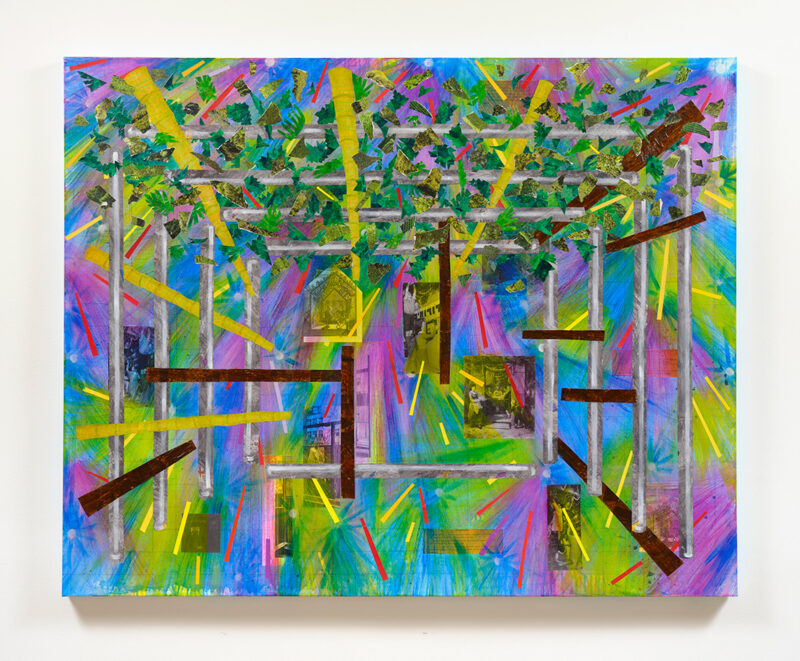
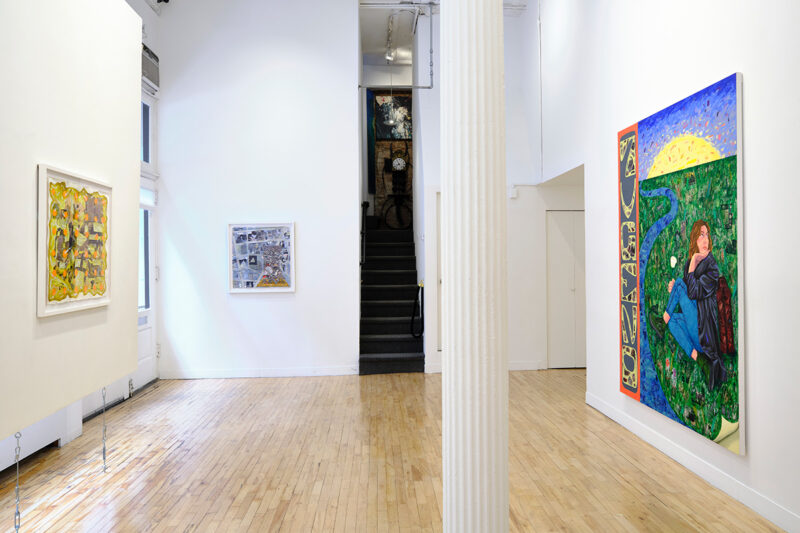
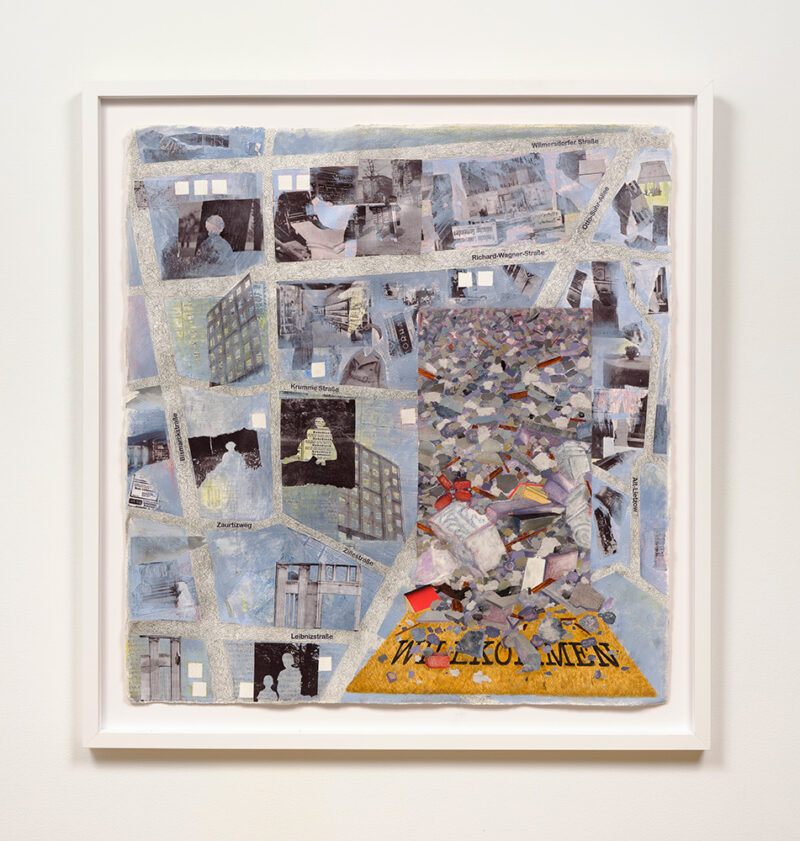
Several of Rothbard’s paintings address the idea of community in Berlin, where the Jewish population consists largely of foreigners, given the small number of Berlin Jews who survived the Holocaust and remained in the city. This tension between present-day life and historical absence is examined in Ghosts and the Guilty, where streets are strewn with empty buildings and businesses formerly owned by Jews that were targeted for Nazi Aryanization. The composition also incorporates historical photographs in which Berlin Jews have been excised from their original settings. Rothbard, welcomed by a city that in part defines itself by the baggage of its past, depicts rubble pouring through a doorway that greets the painting’s viewer. Scattered throughout the map are white (empty) squares symbolizing Stolpersteine, memorial plaques embedded in the sidewalks as part of Gunter Demnig’s ongoing project commemorating deported and murdered Jews across Europe. Their presence is especially notable on Richard-Wagner-Straße (Richard Wagner Street), which remains named for Hitler’s favorite antisemitic composer.
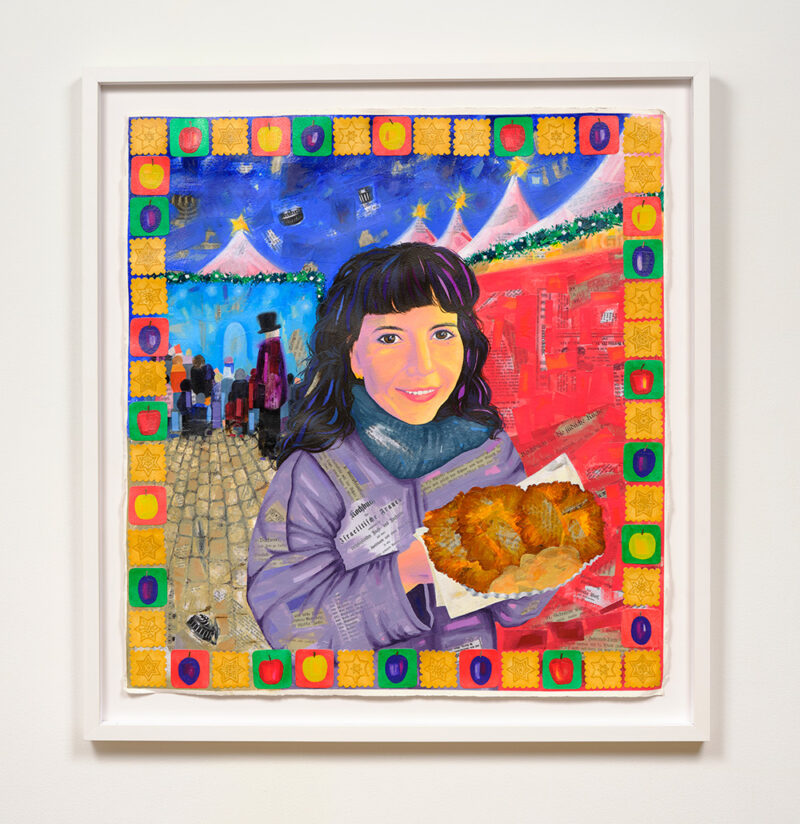
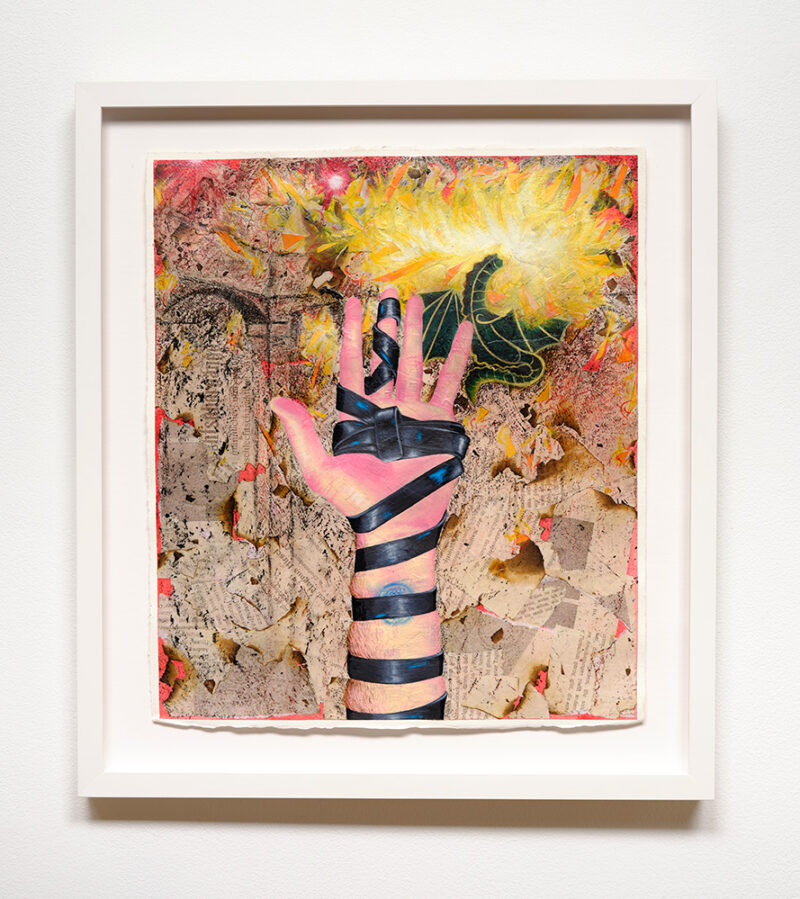
Beyond historical reckoning, Rothbard’s other works turn inward, exploring what it means to practice Judaism in a contemporary Berlin shaped as much by nightlife and nostalgia as by memory. Rothbard’s painting “jüdische Wissenschaft” von heute confronts the idiosyncrasies of being a practicing Jew in the club-heavy city, while “like a plum cannot become an apple” highlights culinary commonalities between German and Jewish communities. “jüdische Wissenschaft”von heute features Rothbard’s friend donning tefillin after a night of clubbing collaged with pages from books written by German Jewish doctor Magnus Hirschfeld, whose Institut für Sexualwissenschaft (Institute for Sexual Science) was looted and burned in 1933. Research like Hirschfeld’s was derided by Nazis as Jüdische Wissenschaft (Jewish science), lending the painting its title. “like a plum cannot become an apple” features another of Rothbard’s contemporaries collaged with German-Jewish cookbooks. Holding a Kartoffelpuffer, cousin to the latke, the subject is encircled by Springerle—traditional German cookies decorated for Chanukah in German-Jewish cookbooks. While this work highlights cross-cultural influences of Jewish culture on German culture and vice versa, the Springerle’s decorations, the twinkling yellow stars on the Christmas market tents, and most importantly the work’s title—part of a quote by antisemitic art historian Julius Langbehn: “A Jew cannot become a German, just like a plum cannot become an apple”—underscores how violently these connections were severed.
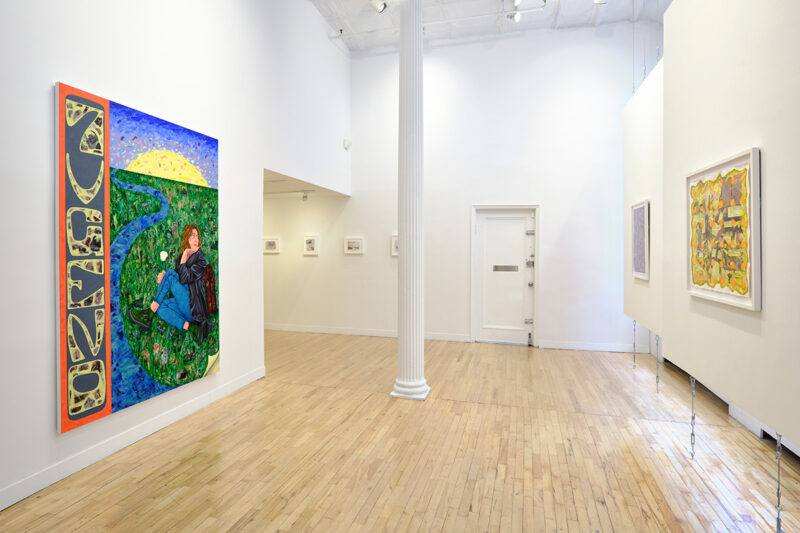
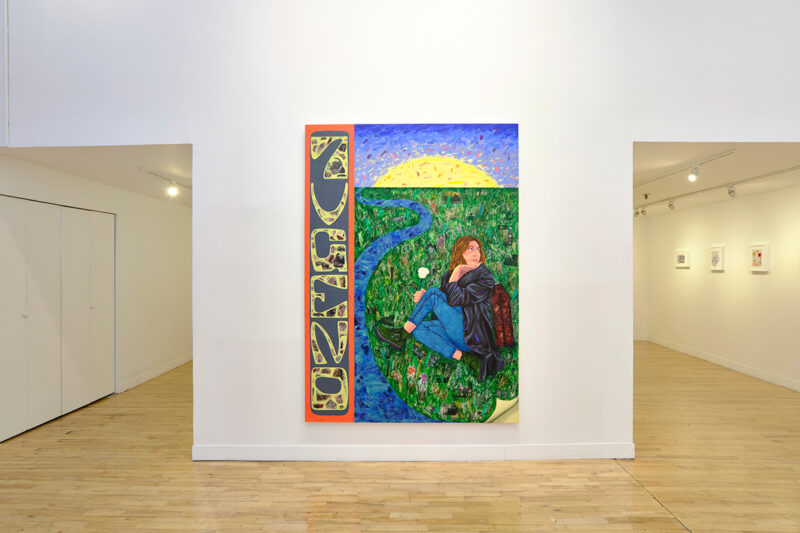
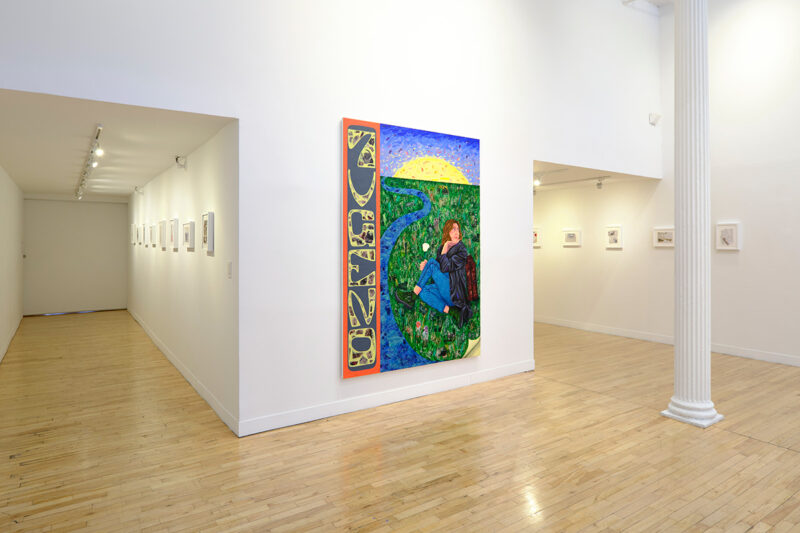
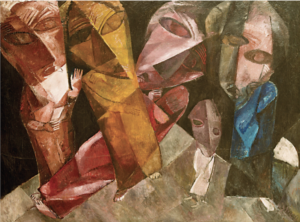
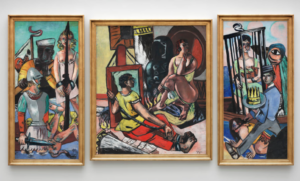
If these works locate Jewish continuity in ordinary acts, Rothbard’s self-portrait moves into the charged terrain of German art history, where Jewish creativity was once cast as “degenerate.” In Self-Portrait of a Degenerate Artist, Rothbard constructs a layered historical collage-painting that draws on the visual culture of German modernism and its suppression under National Socialism. The work depicts Rothbard as if on the cover of Jugend, a literary and arts magazine published in Munich between 1896 and 1940 from which the Jugendstil (German Art Nouveau) movement took its name. After 1933, the magazine began supporting Hitler and the National Socialist movement, whose anti-modernism campaign culminated in the 1937 Entartete Kunst (Degenerate Art) exhibition, staged in parallel with the Große Deutsche Kunstausstellung (Great German Art Exhibition), a propagandistic counterpoint to the “degenerate,” often Jewish art, displayed nearby. Rothbard paints herself in the position of one of the subjects in a Max Beckmann triptych called Versuchung (1936-37); while not Jewish, Beckmann was considered “degenerate” and fled Germany in 1937. Painted in modern clothes, Rothbard sits beside a suitcase collaged with images from Lasar Segall’s The Eternal Wanderers, which was likely included in subsequent Degenerate Art exhibitions. However, where Beckmann’s flower withers in his painting, Rothbard’s blooms, rooted firmly in a present that refuses to fade. In placing herself within this lineage, Rothbard asserts not only continuity with a fractured past, but the persistence of Jewish artistic presence in a city that once sought its eradication.
Hannah Eve Rothbard is a multimedia artist and curator based in New York. She works primarily in mixed media painting, using collected and manipulated paper materials in a layered process. She holds a BFA from New York University. Rothbard has exhibited at venues including 80 Washington Square East Gallery (NY), High Line Nine Galleries (NY), Soft Times Gallery (San Francisco, CA), Halfsister (Berlin, Germany), the Jerusalem Biennale (Israel), and the New York City Poetry Festival. She has held residency at the Materia Prima Foundation (Tuscany, Italy) and received a Fulbright award to Germany for her painting project exploring the contemporary regeneration of the Jewish community in Berlin. She is also the recipient of a 2024 Puffin Foundation Grant.
Please join us for a reception on Saturday, January 31st from 6-8pm.
Text by Goldie Gross – goldiegross1@gmail.com
images above:
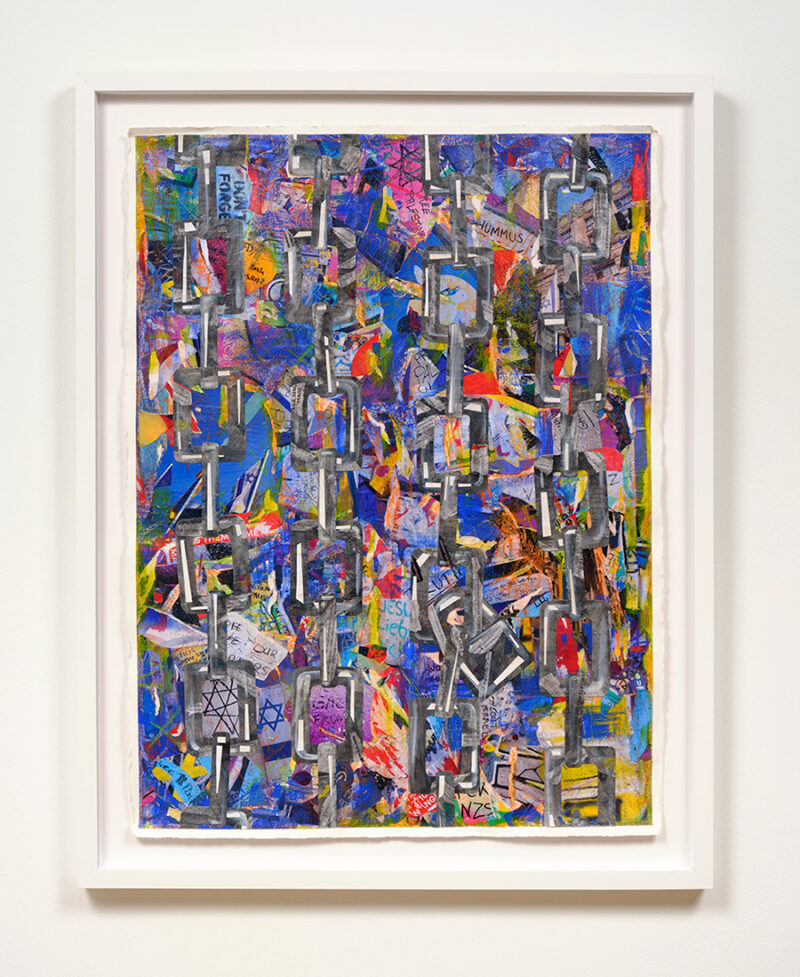
Hannah Eve Rothbard, Ghosts and the Guilty, 2025, Mixed media collage, acrylic paint, oil pastel, ballpoint pen, and graphite on watercolor paper; 30 x 28.5 in
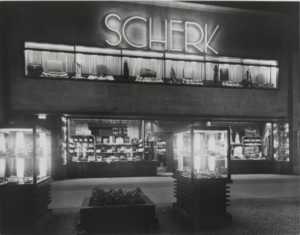
Architect of the building Otto Rudolf Salvisberg, Scherk Perfumery and Leather Goods on Kurfürstendamm at night, Berlin ca. 1930; Jewish Museum Berlin, Inv. No. 2009/335/4/001, Gift of Irene Alice Scherk.
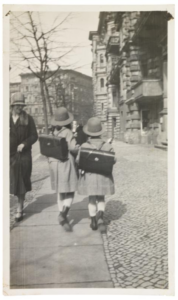
Evelyn and Ingeborg Bendix on their way to school, Berlin 1927; Jewish Museum Berlin, Inv. No. 2006/65/11, Gift of Evelyn Fielden.
Lasar Segall, Eternos caminhantes (The Eternal Wanderers), 1919.
Max Beckmann, Temptation (Temptation of Saint Anthony) Triptych – Central Panel, 1936/37, Bavarian State Painting Collections – Collection of Modern Art in the Pinakothek der Moderne Munich.