
Departures
May 22 – July 12, 2025
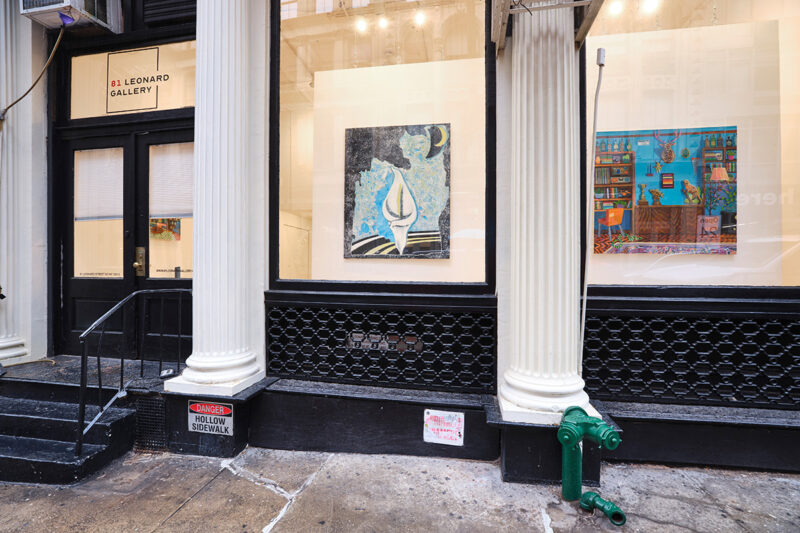
81 Leonard Gallery is pleased to announce Departures, on view from May 22nd through July 12th, 2025. The artwork on view in Departures evidences the human impulse to sentimentalize. Personal milestones, relationships, places, and mortality are driving forces for creatives. Whether the story is one of physical departure from a place or mental departure from the people we once were, our lives are punctuated by these changes. Artists are especially compelled to memorialize and make meaning out of otherwise insignificant objects and materials. The stories and ideas explored by Henry Anker, Sammy Bennett, Steffie Chau, Danielle Klebes, Kendall Henderson, Ray Hwang, Nancy Pantirer, Hannah Eve Rothbard, Katia Rozenberg, Susan May Tell, and Rochelle Voyles are presented visually, but aided by language, as there is always more to the story than the objects themselves can tell.
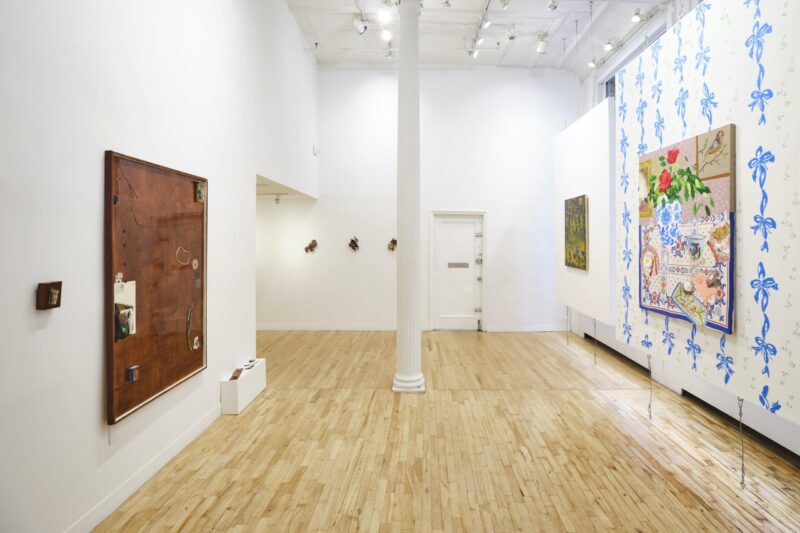
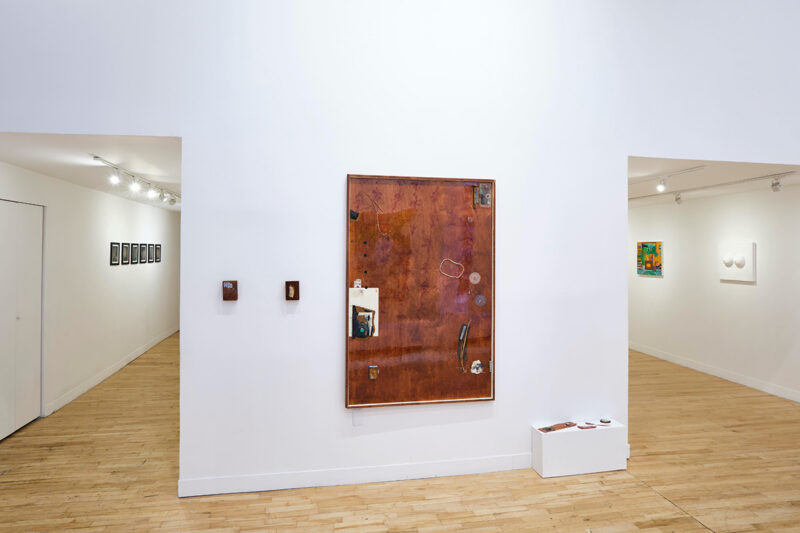
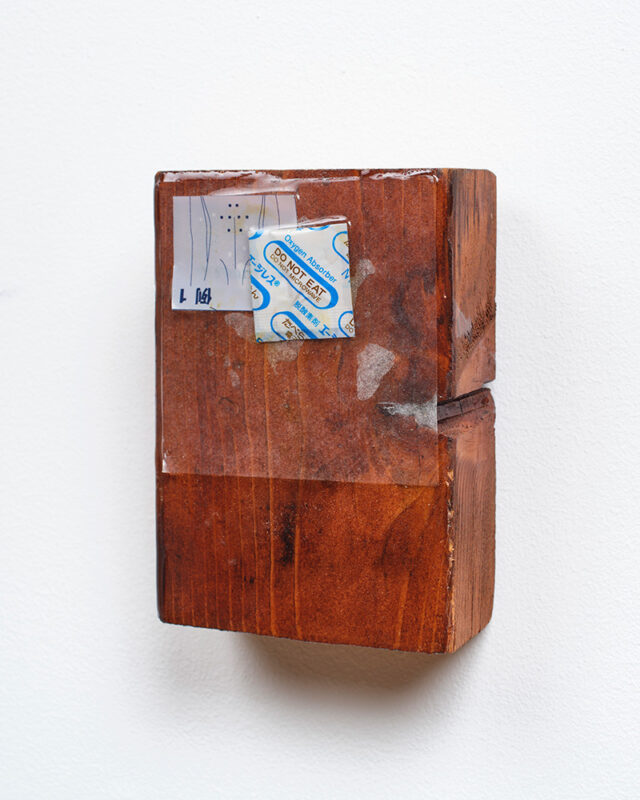
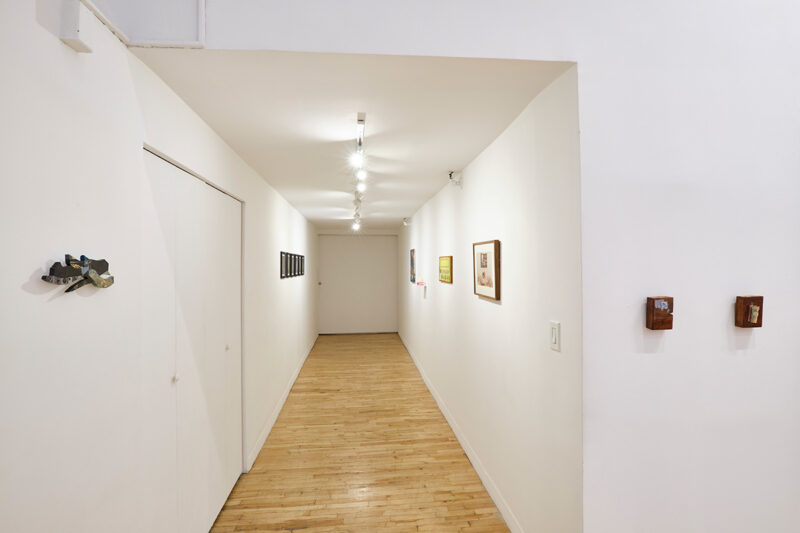
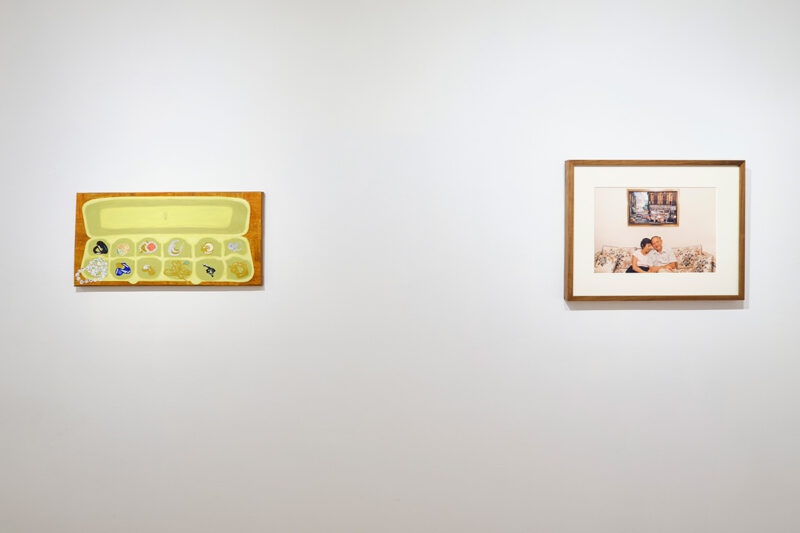
A common thread among much of the work in Departures is the significance of place in one’s memory and formation of identity, as well as the preservation or recreation of relics of relationships. Kendall Henderson’s work tenderly evokes childhood in the American South through assemblage and wood, stained to resemble the furniture of his mother’s home. The smaller wooden pieces are presented like fragments broken from the whole, suggesting the erosion of the material over time after generations of wear and tear. In Susan May Tell’s Portrait of Mom and Dad with a 3-Dimensional Family Painting, her parents are posed in their living room beneath a commissioned painting which combines elements from both of their families. In 1988, Tell was based in Cairo, documenting history throughout the region and photographing remarkable individuals for several major publications. While visiting her parents in Florida, she felt especially compelled to take their portrait, both to honor them as equally remarkable and to restore intimacy in her practice at a time when her career was significant, but detached from those she knew and loved.
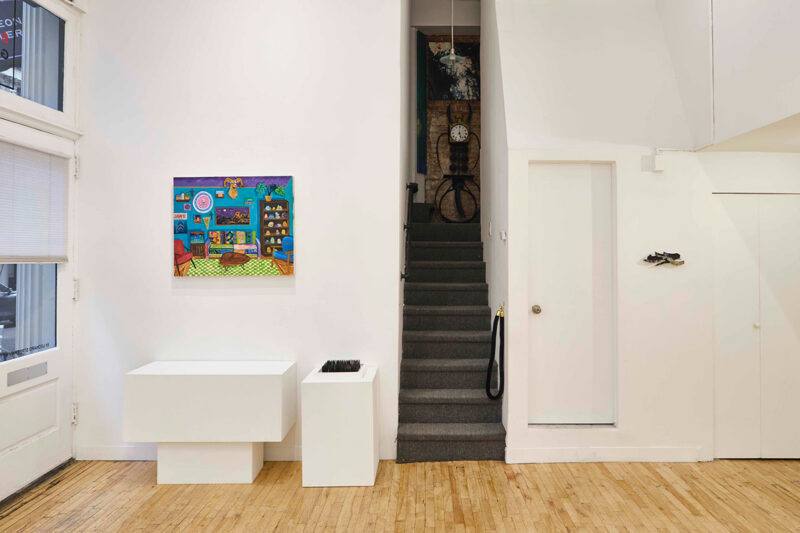
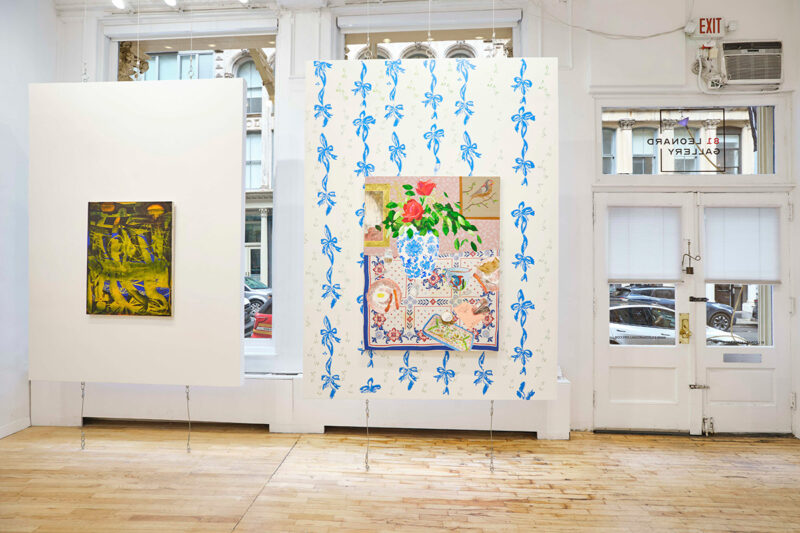
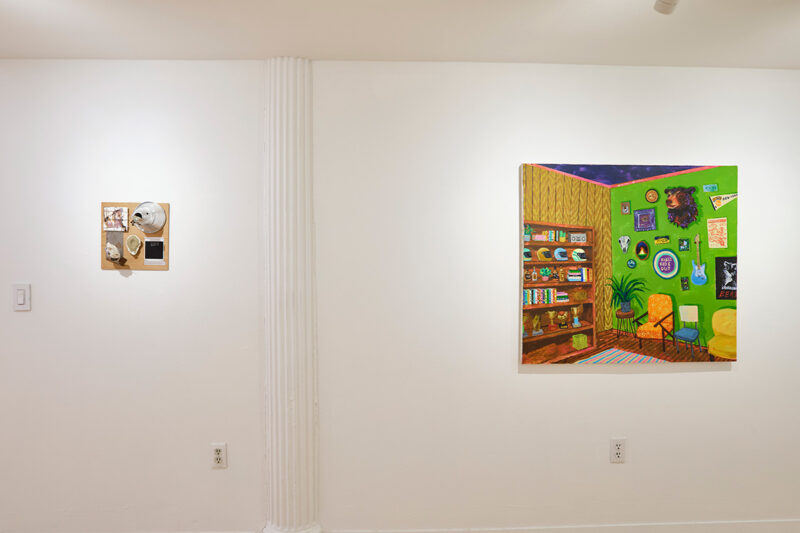
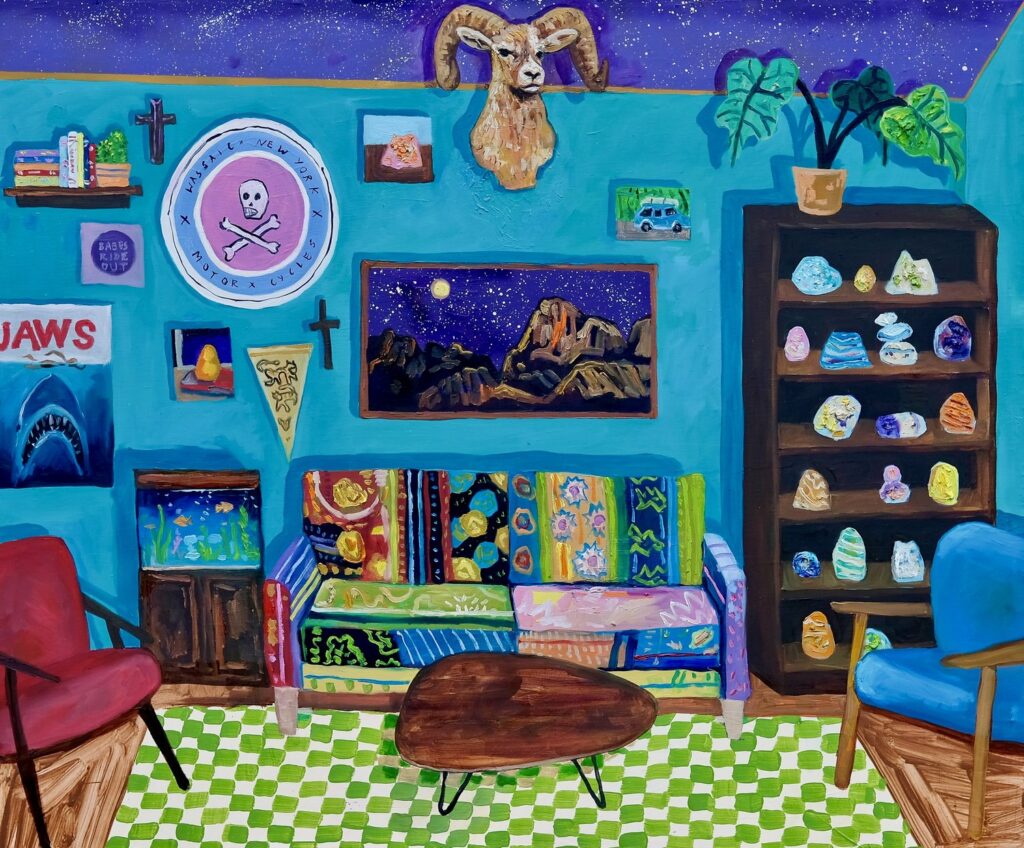
Henry Anker’s Paradise, California reflects on the bittersweet departure from his childhood home in California, prompted by the wildfires last year. A closed lily embodies the duality of hope and apprehension that accompanied his move eastward—a gesture both of preservation and of letting go. Above, a starry sky offers a quiet invitation toward the unknown, its vastness echoing the promise and uncertainty of a new beginning. Danielle Klebes’ paintings build upon her experience renting a furnished apartment from a “Hemingway-type-artist-man” during the pandemic. The apartment’s rooms are reimagined with Klebes’ possessions scattered among the owner’s taxidermy mounts, fishing trophies, and sprawling liquor bottles. Through this blend of objects and aesthetics Klebes presents a fusion of identities where gender, sexuality, and lifestyle converge in intimate and personal spaces.
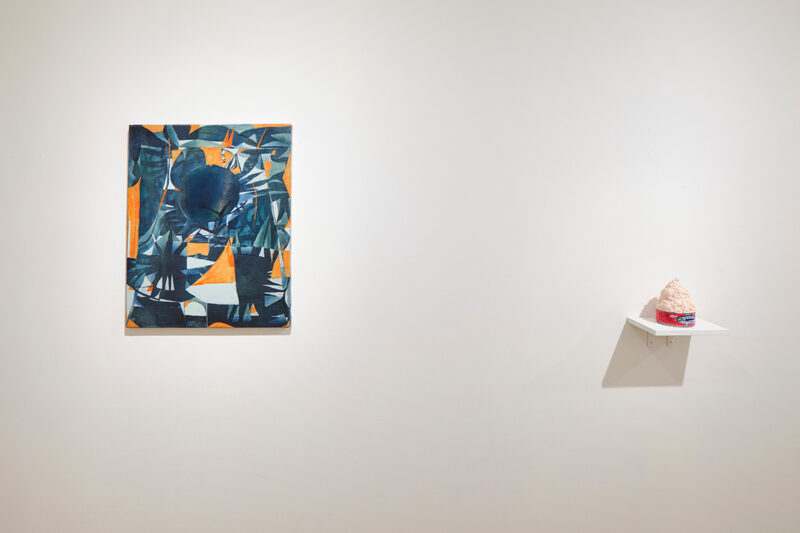
Sammy Bennett’s mixed media installation incorporates specific textiles as well as screen-printed images, embroidery, and painting to evoke the viscerality of memories associated with his grandmother’s home. In addition to using explicit references, like the actual stains on the tablecloth that each hold a story, Bennett also inserts his own symbols, like a rose to represent the resilience his grandmother instilled in him. Hannah Eve Rothbard’s work also relates to her grandmothers’ legacies, meditating on notions of Jewish femininity and on the transference of memory into physical objects. For Granddaughters depicts an egg carton, which both of her perfectly healthy grandmothers use at family gatherings to offer their costume jewelry to their granddaughters, as if in preparation for their departures. Lunch at Savta’s, an exaggerated sculptural mound of tuna with a pearl on top, exemplifies food as a recurrent motif in Rothbard’s work, used in the service of humor and as reference to American Jewish culture. Ray Hwang’s process mirrors the nuanced evolution of memory as it relates to his relationships with family and heritage; layers of painting, airbrushing, and collaging deliberately reveal and obscure specific imagery and references within his largely abstract compositions. The forms in thin ice seagull evoke fish and birds, referencing the aquarium Hwang enjoyed observing with his father as a child and their visits to the park. memorial Crossing; reunion in the sediment, depicts headstones at the top and below imagines his ancestors’ transformations in the afterlife.
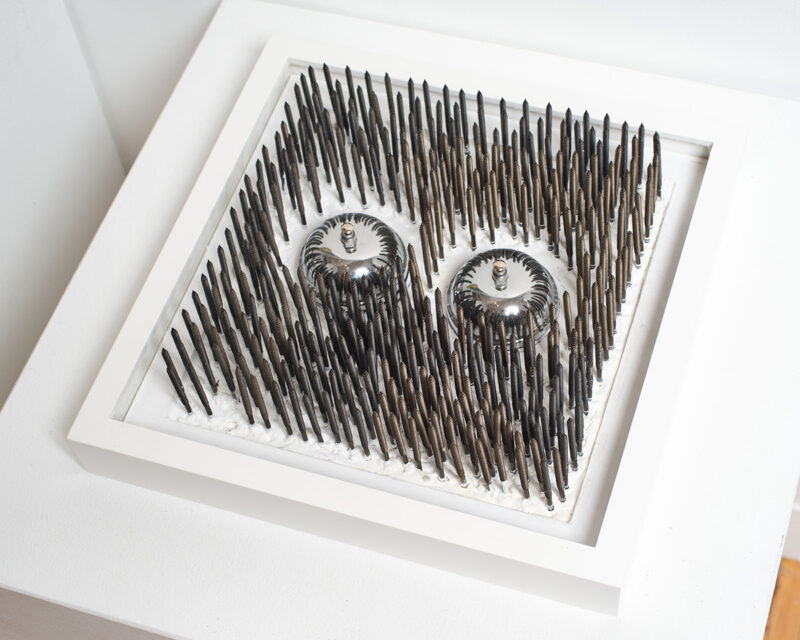
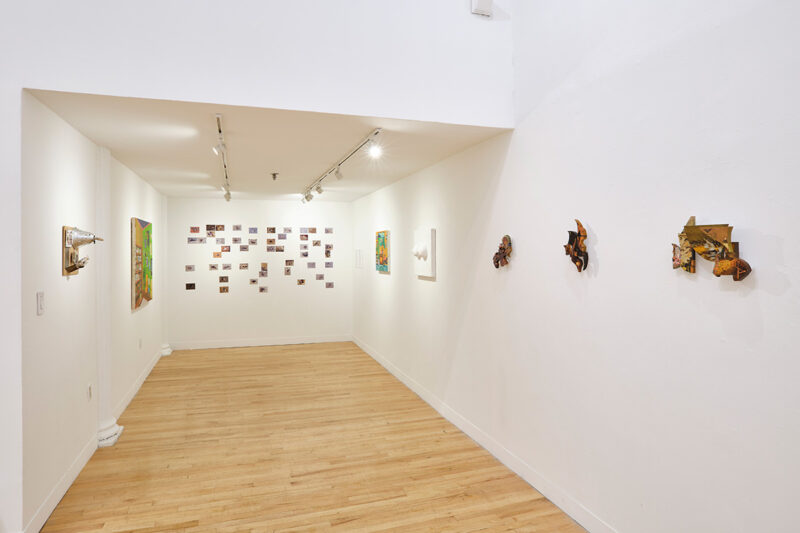
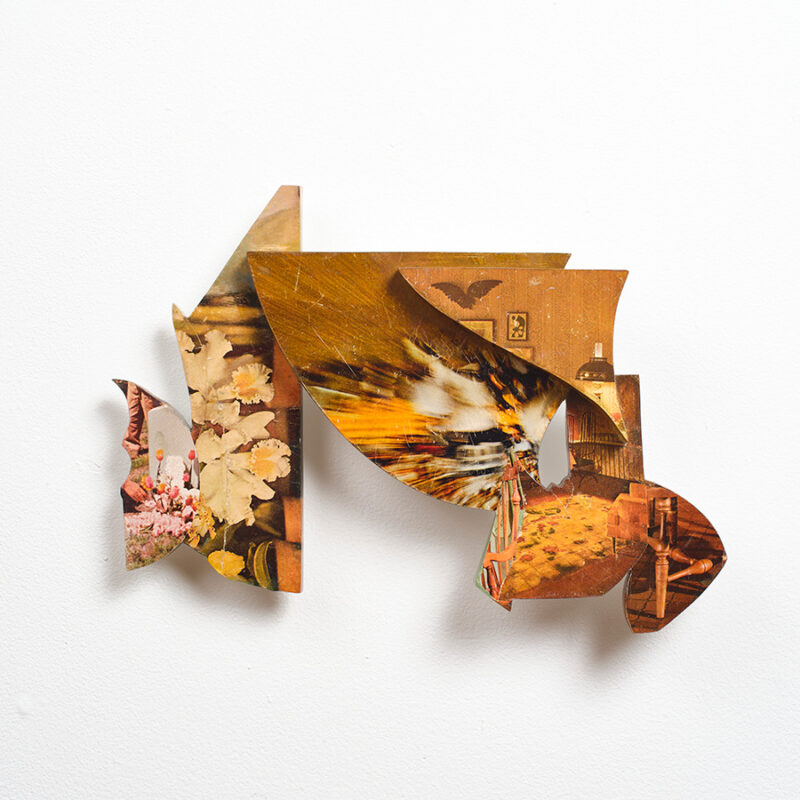
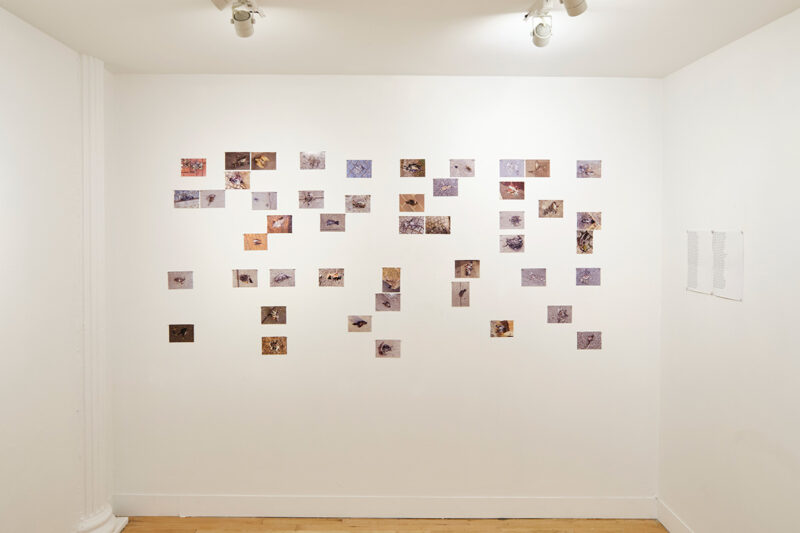
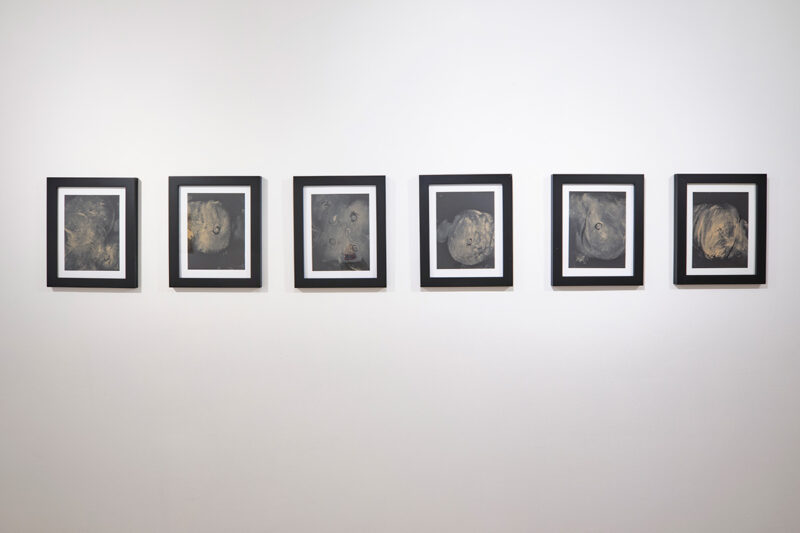
Steffie Chau’s portrait of a first love is a sentimental, personal exploration of the dissolution of a relationship. Presented like a collection of treasures found on the beach, Chau reflects on what remains of her past love—shells saved from a perfect day, a polaroid obscured—adding nuance to nostalgia with post-mortem distance. Incorporating symbols like the ink-stained tile resulting from a failed experiment, Chau emphasizes the misalignments, shifting dynamics, and precariousness often experienced in romantic relationships. Manifested in the act of collection is also fixation. In the making of Dead Birds, Katia Rozenberg engaged in photography as ritual, documenting each dead bird she encountered since 2019. For each bird, Rozenberg said a little prayer to honor them, captured a photo to preserve evidence of their having lived, and meticulously recorded the time and place. Working primarily with found objects and images, Rozenberg sees this work as a sort of sacred collection. Nancy Pantirer’s Close to My Heart series emerged from an obsession with breasts while undergoing cancer treatment several years ago. Facing mortality and the bodily transition that comes not just with illness but also with age, Pantirer fixated on the female body, reconsidering her own perceptions of beauty, sexuality, and purpose. Rochelle Voyles’ mixed media sculptures also reflect a fixation or continuous investigation. Composed using the negatives cut from her larger wood-cut sculptures as well as the found images left out from their collaged surfaces, the small works resist finality. Continuing the narratives of her larger works in both material and method, Voyles employs her meticulous collage process to create a visual amalgamation of people, places, and things, pointing to personal and collective anxieties and emotions.
Image above: Danielle Klebes, Living room (nowhere), Oil on canvas, 24 x 30 in.